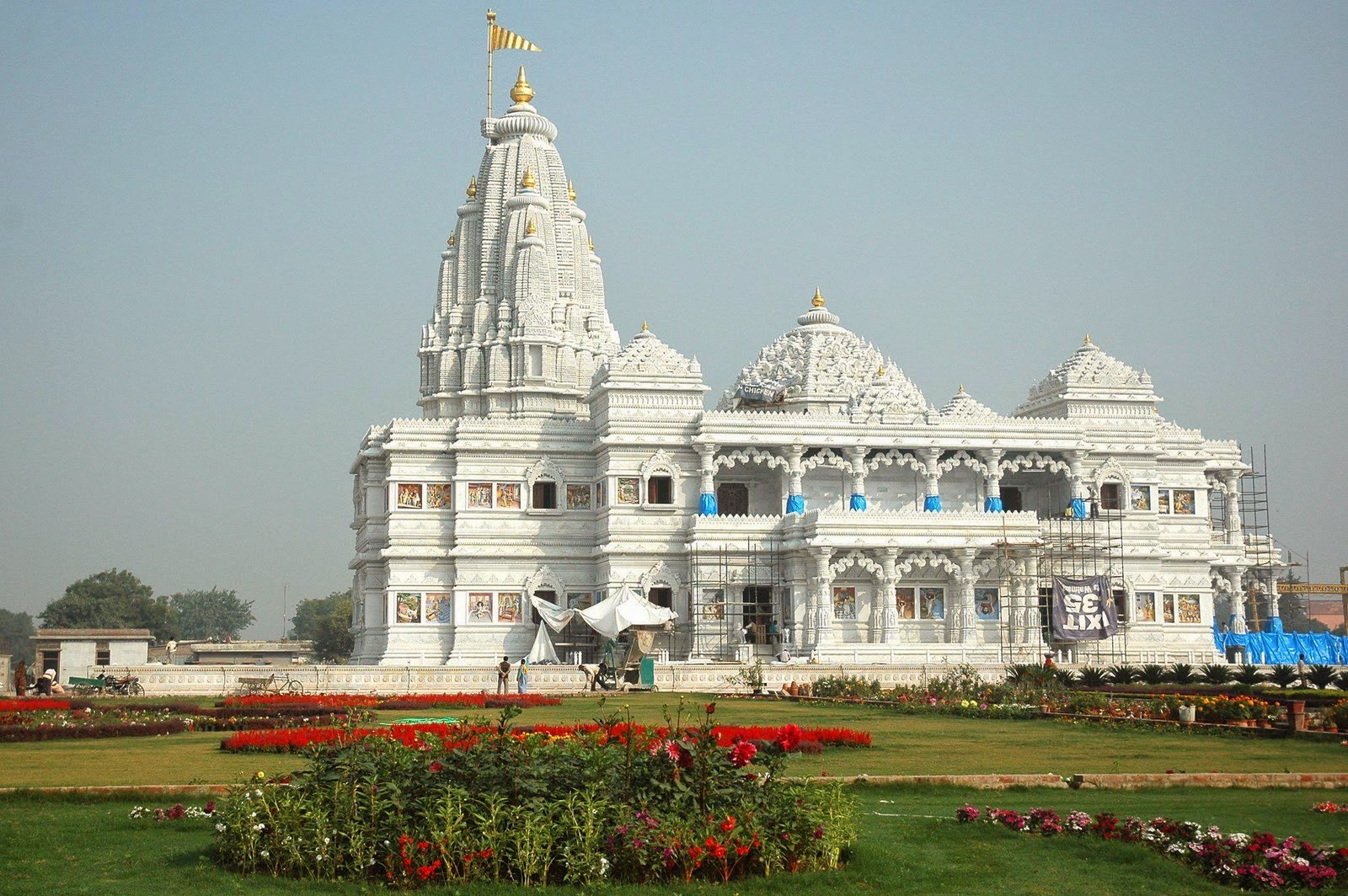
Vrindavan, a city located near Mathura in Uttar Pradesh, India, is renowned for its deep connection to Lord Krishna and his divine pastimes. It is a major pilgrimage site and holds immense spiritual and cultural significance. Here’s an elaborate description of key places of interest in Vrindavan:
1. Banke Bihari Temple
Description: The Banke Bihari Temple is dedicated to Lord Krishna, known as Banke Bihari. The temple was established by Swami Haridas, a prominent saint and devotee of Krishna, in the late 16th century.
Significance: The temple is famous for its lively and devotional atmosphere. The deity of Banke Bihari is worshipped in a unique standing posture with a bent figure, which symbolizes his playful and loving nature.
Local Practices: Visitors participate in vibrant aartis (rituals), devotional singing, and dance. The temple is known for its bustling environment and attracts a large number of devotees, especially during festivals.
2. ISKCON Vrindavan (Sri Krishna Balaram Mandir)
Description: ISKCON Vrindavan, also known as the Sri Krishna Balaram Mandir, is part of the International Society for Krishna Consciousness (ISKCON). The temple is dedicated to Krishna and his brother Balaram.
Significance: The temple is renowned for its well-organized devotional programs, including daily bhajans (devotional songs), kirtans, and lectures on Krishna’s teachings. It serves as a center for spreading the message of Krishna consciousness.
Local Practices: Devotees engage in devotional practices, including attending aartis, participating in spiritual discourses, and taking part in community events.
3. Radha Raman Temple
Description: The Radha Raman Temple is dedicated to Lord Krishna and Radha. The deity of Radha Raman is worshipped here, and the temple is known for its spiritual ambiance and simple yet elegant architecture.
Significance: The temple holds great importance for devotees of Radha and Krishna. It is known for its peaceful atmosphere and the divine presence of Radha Raman.
Local Practices: Visitors offer prayers, participate in aartis, and engage in devotional singing and meditation.
4. Radha Kund and Shyama Kund
Description: Radha Kund and Shyama Kund are two sacred ponds located near Vrindavan. Radha Kund is associated with Radha, and Shyama Kund is associated with Krishna.
Significance: Both ponds are considered highly auspicious and are central to the devotional practices of followers of Radha and Krishna. Pilgrims often visit these ponds for ritual bathing and prayers.
Local Practices: Devotees take holy dips in the ponds, perform rituals, and engage in devotional activities. The area is frequented by those performing the Govardhan Parikrama.
5. Prem Mandir
Description: Prem Mandir is a large temple complex dedicated to Lord Krishna and Radha. The temple features beautiful marble carvings and a stunning architectural design.
Significance: The temple is known for its elaborate displays of Krishna’s pastimes and its serene environment. It is a relatively modern temple but has quickly become a prominent site for devotees.
Local Practices: Visitors admire the temple’s architecture, participate in devotional activities, and engage in spiritual reflection.
6. Krishna Janmabhoomi Temple (Vrindavan)
Description: This temple is dedicated to the birthplace of Lord Krishna in Vrindavan. It is distinct from the Krishna Janmabhoomi Temple in Mathura but holds similar significance.
Significance: The temple marks the location where Krishna is believed to have appeared in Vrindavan. It is an important pilgrimage site for devotees.
Local Practices: Pilgrims visit the temple to offer prayers, participate in rituals, and seek blessings from Lord Krishna.
7. Nidhivan
Description: Nidhivan is a sacred grove in Vrindavan, believed to be the place where Krishna and Radha performed their divine pastimes. The area is known for its mystical atmosphere and the presence of various temples.
Accessibility: Nidhivan is considered a place of divine mystery, and it is believed that Krishna still performs his pastimes here. The site is associated with various legends and spiritual experiences.
Local Practices: Visitors explore the grove, participate in devotional activities, and observe the unique practices associated with the site.
8. Vrindavan’s 84 Kos Parikrama
Description: The 84 Kos Parikrama is a pilgrimage route that circles the sacred land of Vrindavan. It is a significant spiritual journey covering approximately 84 miles (135 kilometers).
Significance: The parikrama is a traditional practice for devotees who wish to circumnavigate the holy land of Vrindavan, visiting various sacred sites along the way.
Local Practices: Pilgrims undertake the parikrama to seek spiritual merit, visiting various temples and sacred spots along the route.
9. Gokul
Description: Gokul, a nearby village, is associated with Krishna’s childhood and early life. It features several important sites, including the Nand Baba Temple and other historic temples.
Significance: Gokul provides insights into Krishna’s early life and is a key location for understanding his divine activities.
Local Practices: Visitors explore the village, visit temples, and engage in devotional practices related to Krishna’s childhood.
10. Govardhan Hill
Description: Although not in Vrindavan proper, Govardhan Hill is closely associated with Vrindavan and is an important site for the Govardhan Parikrama. It is a short distance from Vrindavan and holds significant religious value.
Significance: The hill is revered for its connection to Krishna’s divine protection and is central to the Govardhan Yatra.
Local Practices: Pilgrims perform the circumambulation of the hill, visit key temples along the parikrama route, and engage in devotional practices.
11. Radhavallabh Temple
Description: The Radhavallabh Temple is dedicated to Lord Krishna and Radha. The temple is known for its serene environment and beautiful deities.
Significance: The temple is a prominent site for devotion to Radha and Krishna and is visited by many pilgrims seeking blessings and spiritual fulfillment.
Local Practices: Visitors offer prayers, participate in aartis, and engage in devotional singing and meditation.
These sites in Vrindavan collectively represent the rich spiritual heritage and divine pastimes of Lord Krishna. They offer a comprehensive view of Krishna’s life and teachings, making Vrindavan a significant destination for pilgrims and spiritual seekers.