Certainly! Here’s an elaborate description of each place of interest in and around Govardhan:
1. Govardhan Hill (Giriraj)
Description: Govardhan Hill, also known as Giriraj, is a sacred hill located in the Mathura district of Uttar Pradesh. It is approximately 21 kilometres in circumference and is considered a manifestation of Lord Krishna. The hill is revered for the episode where Krishna lifted it on his little finger to protect the villagers from the wrath of Indra, the rain god.
Significance: The hill is central to the Govardhan Yatra, where devotees circumambulate it as an act of devotion. It symbolizes Krishna's divine protection and his relationship with his devotees. The parikrama (circumambulation) around the hill is a significant pilgrimage practice.
Accessibility: Visitors can start the parikrama from various points, including the Manasi Ganga. The path is well-trodden and usually takes around 5-6 hours to complete.
2. Dwarkadhish Temple
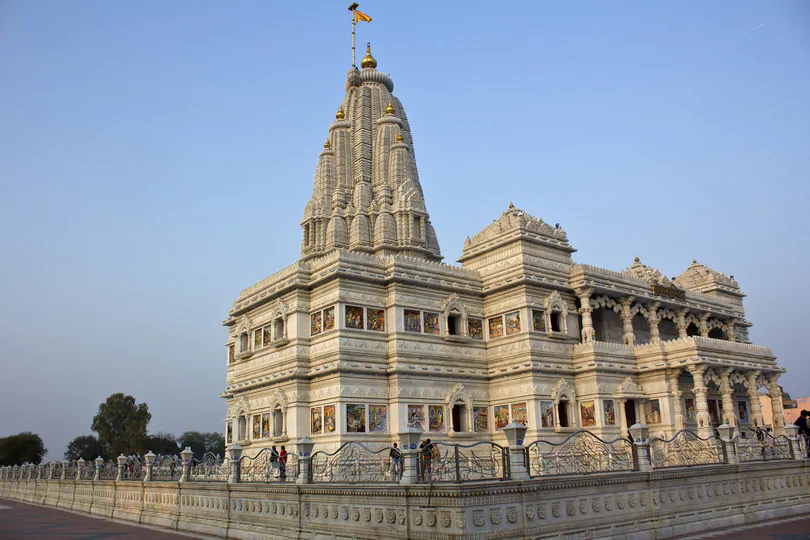
Description: Dedicated to Lord Krishna as Dwarkadhish (the king of Dwarka), this temple is renowned for its vibrant and elaborate decorations. It was built in the 19th century and is known for its beautiful architecture.
Significance: The Dwarkadhish Temple is an important site for worship and devotion, with daily rituals and ceremonies that attract many visitors.
Local Practices: The site sees numerous devotional activities, including chanting, prayers, and rituals. Devotees often visit Radha Kund during the Govardhan Yatra.
3. Shyama Kund
Description: Shyama Kund is another sacred pond located close to Radha Kund. It is believed to be the place where Krishna engaged in various divine pastimes with his associates.
Significance: Along with Radha Kund, Shyama Kund is considered highly auspicious. Pilgrims often visit both ponds together, as they are closely linked in Krishna's pastimes.
Local Practices: Pilgrims perform rituals, offer prayers, and engage in devotional activities at this sacred site. The atmosphere is serene and spiritual.
4. Daan Ghati Mandir
Description: The Daan Ghati Mandir is a temple dedicated to Lord Krishna located on Govardhan Hill. The temple is named after the term "Daan Ghati," which refers to the place where Krishna performed acts of charity.
Significance: The temple is an important stop on the Govardhan Parikrama route. It is believed that visiting this temple and offering prayers here can fulfill one's wishes and bring divine blessings.
Local Practices: Pilgrims often stop here during their parikrama to offer their respects and seek Krishna's blessings. The temple has a serene atmosphere conducive to worship.
5. Mukharvind
Description: Mukharvind is a temple situated along the Govardhan Parikrama path. It is dedicated to Lord Krishna and is known for its spiritual ambiance.
Significance: Mukharvind is one of the several temples that pilgrims encounter during their parikrama. It is associated with Krishna’s pastimes and is a place for prayer and reflection.
Local Practices: Pilgrims visit Mukharvind to offer their prayers and participate in devotional activities. The temple often has a peaceful environment for worship.
6. Kusuma Sarovar
Description: Kusuma Sarovar is a beautiful water tank surrounded by lush greenery and several temples. It is believed to be a place where Krishna and his associates spent time.
Significance: The site is revered for its beauty and spiritual significance. It is an important location for pilgrims who visit Govardhan Hill.
Local Practices: Devotees often take a dip in the sacred waters of Kusuma Sarovar and perform rituals. The site is also used for meditation and devotional gatherings.
7. Rinamochana
Description: Rinamochana is a sacred site located near Govardhan Hill. It is associated with a story where Krishna relieved his devotees from their debts.
Accessibility: The site is considered auspicious for those seeking to relieve themselves of burdens or debts, both literal and metaphorical.
Local Practices: Pilgrims visit Rinamochana to offer prayers and participate in rituals aimed at seeking Krishna’s blessings and divine intervention.
8. Puchari
Description: Puchari is a small temple located on Govardhan Hill. It is dedicated to Lord Krishna and is situated along the Govardhan Parikrama route.
Significance: The temple is an important stop for devotees performing the parikrama. It provides an opportunity for worship and reflection during the pilgrimage.
Local Practices: Visitors to Puchari offer their prayers and engage in devotional activities. The temple is often noted for its tranquility and sacred atmosphere.
9. Manasi Ganga
Description: Manasi Ganga is a sacred water tank located near Govardhan Hill. According to legend, the tank was created by Lord Krishna’s mind (manas) and is thus considered highly sacred.
Significance: It is a key site for pilgrims performing the Govardhan Parikrama. The tank is associated with various rituals and ceremonies, including bathing and prayer.
Local Practices: Pilgrims visit Manasi Ganga to perform rituals, take holy dips, and engage in devotional activities. The site is often crowded during major pilgrimage seasons.
10. Vrindavan
Description: Vrindavan is a nearby town known for its association with Lord Krishna. It is home to many significant temples and spiritual sites, including the Banke Bihari Temple and ISKCON Temple.
Significance: Vrindavan provides additional context and spiritual depth to the Govardhan Yatra. It is closely linked to Krishna’s life and is a major pilgrimage destination.
Local Practices:: Visitors to Vrindavan engage in various devotional activities, including visiting temples, participating in kirtans (devotional singing), and exploring sacred sites associated with Krishna’s pastimes.
11. Mathure
Description: Mathura is a historic city and the birthplace of Lord Krishna. Key sites include the Krishna Janmabhoomi Temple, which marks the location of Krishna's birth.
Significance: Mathura is integral to the Krishna tradition and enhances the spiritual experience for those visiting Govardhan. It provides historical and cultural context for the pilgrimage.
Local Practices:: Pilgrims and visitors to Mathura often visit key temples, participate in religious ceremonies, and explore the city’s rich historical heritage.
These sites collectively form a rich tapestry of spiritual and cultural significance for devotees and visitors participating in the Govardhan Yatra and exploring the surrounding regions.